A motorcycle delivery box faces heat, dust, rain, heavy traffic and constant vibration every day. Over time, these conditions can loosen the mounting system, wear out locks, damage weather seals, and reduce the box’s ability to protect its contents.
Regular maintenance helps prevent these problems before they become costly repairs or safety risks. It also keeps the delivery box secure, protects your items and extends its lifespan.
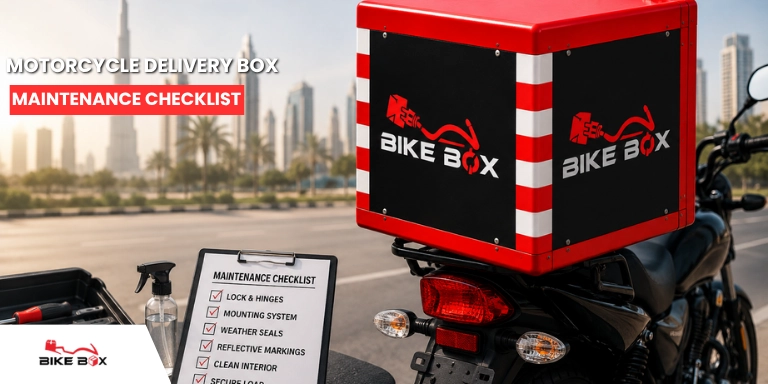
This delivery box maintenance checklist covers simple daily, weekly and monthly inspections to help keep your delivery box clean, safe and reliable. Whether you manage a delivery fleet or ride independently, these easy maintenance steps will help keep your delivery box in excellent condition.
Need a Reliable Motorcycle Delivery Box?
Whether you’re replacing an old delivery box or expanding your delivery fleet, BikeBox offers durable, weather-resistant motorcycle delivery boxes built for Dubai’s demanding conditions. Our experts can help you choose the right size and model for your business.
Why Motorcycle Delivery Box Maintenance Matters
Regular maintenance keeps the delivery box safe, clean and reliable. A loose box can affect the motorcycle’s balance, especially during sudden braking or sharp turns.
Maintenance also protects food, medicines and parcels from heat, dust, water and fumes. In Dubai, road temperatures can rise above 50°C, so good insulation and secure seals are important. Small repairs cost less than buying a new delivery box.
How Often Should You Inspect a Bike Delivery Box?
The best maintenance routine combines quick daily inspections with more detailed weekly and monthly checks. Frequent inspections make it easier to identify small issues before they become serious safety concerns.
Quick Maintenance Schedule
| Inspection Frequency | What to Check |
|---|---|
| Before every shift | Lock, lid, mounting plate, fasteners, cracks, reflective markings, load security |
| After every shift | Empty, clean, disinfect (if required) and dry the interior |
| Weekly | Hinges, weather seals, lock, mounting points, reflectors, liner, visible wear |
| Monthly | Remove the box (if possible), inspect the complete mounting system, rack, brackets, rubber pads, washers and hardware |
Before Every Shift
Spend two or three minutes inspecting the delivery box before every ride. Hold both sides of the box and gently move it to check for any unusual movement. There should be no looseness between the box, mounting plate, luggage rack and motorcycle.
Before starting your shift, check that:
- The lid closes and locks securely.
- The box does not wobble.
- No bolts or fasteners are missing.
- Reflective markings are clean and clearly visible.
- There are no new cracks or visible damage.
- The load is secure and evenly distributed.
This quick inspection is especially important if someone else used the motorcycle during the previous shift.
After Every Shift
Empty the delivery box after every shift. Remove food packaging, tape, dirt, crumbs, and any spilled liquids before storing the bike.
Wipe the interior with a suitable cleaner and allow it to dry completely before closing the lid. Moisture trapped inside the box can lead to unpleasant odours, mould, and material damage.
For food deliveries, clean and disinfect the interior after every shift and immediately after any spill or contamination.
Weekly Inspection
Carry out a more detailed inspection once each week. Pay close attention to components that experience frequent movement or vibration.
Look for:
- Loose accessible fasteners
- Rust or corrosion
- Cracked plastic
- Loose hinge screws
- Dirt around weather seals
- Water trapped beneath removable liners
- Faded or damaged reflective tape
Many manufacturers recommend inspecting bolts, screws, locks, straps, and mounting fittings regularly to identify wear before it affects safety.
Monthly Inspection
Once a month, perform a complete inspection of the delivery box and its mounting system. If the design allows, remove the box from the mounting plate and inspect:
- The underside of the box
- Mounting plate
- Luggage rack
- Rubber vibration pads
- Washers and nuts
- Brackets and joints
Remove accumulated dust, sand, and road debris from all connection points. In dusty environments such as Dubai, fine sand can build up around moving components and contribute to premature wear.
For commercial fleets, keep a maintenance record showing:
- Inspection date
- Delivery box number
- Faults identified
- Repairs completed
- Replacement parts installed
Maintaining simple service records helps identify recurring issues and supports preventive maintenance across the fleet.
Complete Bike Delivery Box Maintenance Checklist
1. Inspect the Delivery Box for Cracks and Damage
Start by cleaning the outside of the delivery box so any damage is easy to spot. Dirt and dust can hide small cracks that may worsen over time.
Carefully inspect the:
- Lid
- Base
- Corners
- Handles
- Hinges
- Mounting areas
Look for signs of:
- Cracks, splits or dents
- Sharp edges
- Warped or weakened sections
- Heat damage or fading
- Previous repairs that are starting to fail
Pay special attention to cracks around mounting holes. These areas experience constant vibration and carry much of the box’s weight. If a crack is growing, flexing or reaches a mounting point, repair or replace the box before using it again.
2. Check the Mounting Rack, Plate and Brackets
A secure mounting system is just as important as the delivery box itself. Even a strong box becomes unsafe if the rack or mounting plate is loose.
Gently push the box forward, backward, and from side to side while watching every connection point for movement.
Inspect the following components:
- Bolts, nuts, washers, and spacers
- Mounting plate hooks and locking points
- Rack welds and bracket joints
- Rubber vibration pads
- Bent, worn, or corroded hardware
Always use the correct tools and follow the instructions provided for the delivery box, mounting rack and motorcycle. Never guess torque settings or substitute hardware that only appears to fit.
If the box still moves after tightening the approved fasteners, stop using it until the entire mounting system has been inspected and repaired.
3. Test the Lock and Latching Mechanism
Open and close the lid several times. The latch should engage smoothly. Lock the box, remove the key and gently pull the lid to confirm it is secure.
Check for:
- A stiff or loose key
- A damaged lock cylinder
- A weak handle
- Dirt inside the latch
- Poor lid alignment
- Movement between the box and mounting plate
Also check that the key can be removed without force. A key that sticks may point to dirt, wear, corrosion or poor alignment.
Use only a lubricant suitable for the lock and box material. Replace a bent or badly worn key before it breaks.
4. Inspect Hinges, Lid Supports and Fasteners
The hinges and lid supports are opened and closed countless times throughout the life of a delivery box. Constant vibration and frequent use make them common wear points.
Inspect the hinges for:
- Cracks
- Excessive movement
- Missing hinge pins
- Loose screws
- Corrosion
Also examine any lid straps, cables, or support arms. These components prevent the lid from opening too far or dropping unexpectedly. Replace damaged parts before they place additional stress on the hinges.
Open the lid slowly and watch both sides carefully. The lid should move smoothly and evenly. Twisting or uneven movement may indicate a loose hinge or damaged support.
5. Examine the Weather Seals
Weather seals help keep rain, dust, road grime and moisture out of the delivery box. Well-maintained seals also improve insulation and help protect temperature-sensitive deliveries.
Inspect the rubber seal around the lid by checking for:
- Cracks or splits
- Flattened or hardened sections
- Gaps around the lid
- Dirt trapped inside the seal channel
Press the rubber gently. A healthy seal should remain flexible and return to its original shape quickly.
Close the lid and inspect the entire edge to ensure there are no visible gaps where dust or water could enter.
Clean the seal regularly with a soft cloth and mild soapy water. Removing dirt from the seal channel helps maintain a tight, reliable fit and extends the life of the gasket.
6. Clean and Disinfect the Interior
Keeping the inside of your bike delivery box clean is essential, especially when transporting food, medicines, or other sensitive items. Regular cleaning prevents unpleasant odours, reduces bacteria build-up and helps extend the life of the box.
Start by removing any loose dirt, crumbs, packaging, or debris. Then clean the interior using a mild cleaner that is safe for both the box material and its intended use.
Follow these steps:
- Remove trays, dividers and removable liners.
- Brush or vacuum loose dirt and debris.
- Wash all interior surfaces with warm water and a suitable cleaner.
- Disinfect after food spills or possible contamination.
- Wipe away any cleaning or disinfectant residue.
- Dry every surface completely before reassembling the box.
- Reinstall only clean and dry components.
Pay extra attention to corners, lid edges, seams and beneath removable liners, where food particles and moisture often collect unnoticed.
Never mix cleaning chemicals or use harsh solvents, abrasive cleaners or products that are not approved for your delivery box. These can damage plastic surfaces, insulation, weather seals, coatings, or reflective materials.
7. Inspect Insulation and Internal Liners
If your delivery box is designed for transporting hot or cold items, the insulation system plays a vital role in maintaining safe temperatures.
Inspect the insulated interior for signs of wear or damage that could reduce thermal performance.
Check for:
- Torn or peeling foil lining
- Damaged foam insulation
- Loose or worn internal liners
- Moisture trapped beneath removable inserts
- Worn or loose compartment dividers
If your box uses Velcro dividers, make sure they still hold securely to prevent items from shifting during transport.
Remove foam inserts periodically and allow them to dry completely. Trapped moisture can lead to unpleasant odours, mould and reduced insulation performance.
8. Clean and Inspect Reflective Markings
Reflective markings improve visibility in low-light conditions and help other road users see your motorcycle more easily.
Clean all reflective strips regularly using a soft microfiber cloth to remove dust, grease, road film, and exhaust residue.
After cleaning, inspect them for:
- Peeling edges
- Fading
- Cracks
- Scratches
- Reduced reflectivity
A simple way to check their condition is to shine a flashlight directly at the reflective tape. Bright, even reflection usually indicates that the material is still effective.
Replace damaged or faded reflective tape promptly using high-quality reflective material suitable for road use.
9. Confirm the Load Limit and Weight Distribution
Never assume a large box can carry a heavy load. Capacity in litres describes available space, not safe weight.
Check:
- The delivery box load limit
- The rack or mounting plate limit
- The motorcycle luggage limit
Follow the lowest stated limit. Product ratings vary, so copying a figure from another box is unsafe. Manufacturer manuals also stress carrying-capacity limits and even weight distribution.
10. Perform a Final Stability and Road Check
After completing any cleaning, maintenance or repairs, carry out one final inspection before returning the bike to service.
Before riding, confirm that:
- The box is securely locked onto the mounting plate.
- The lid is fully closed and locked.
- The box does not move when pulled in different directions.
- There is enough clearance from the rear wheel, exhaust, seat and lights.
- The load is properly secured inside the box.
Once these checks are complete, perform a short, low-speed test ride in a safe area.
Listen carefully for:
- Knocking sounds
- Rattles
- Excessive vibration
- Unexpected movement
- Changes in handling or balance
If anything feels unusual, stop immediately and inspect the mounting system before continuing your journey.
Tools and Supplies Needed for Delivery Box Maintenance
Keeping a small maintenance kit at home or in the workshop makes routine inspections faster and more convenient.
A basic kit should include:
- Soft microfiber cloths
- Soft-bristle brush
- Mild, material-safe cleaner
- Approved disinfectant
- Clean water
- Small vacuum cleaner
- Correct screwdrivers and spanners
- Torque wrench (where specified)
- Manufacturer-approved lubricant
- Approved replacement fasteners
- Spare weather seals
- Protective gloves
Choose cleaning products that are suitable for your delivery box materials. Before using any cleaner, always read the product label and your delivery box manufacturer’s instructions.
Looking for a Reliable Bike Delivery Box?
Whether you are expanding a delivery fleet or replacing an existing box, choosing the right equipment is just as important as maintaining it.
Bikebox offers durable motorcycle delivery boxes designed for daily commercial use in Dubai. Combined with proper installation and regular maintenance, a high-quality delivery box helps protect your items, improve rider safety and support efficient delivery operations. Request a free consultation.
FAQs
How Often Should You Clean a Bike Delivery Box?
Clean your delivery box after every shift to remove dirt, food residue, and moisture. If food, drinks, or other liquids spill inside, clean and disinfect the box immediately. A more thorough cleaning once a week helps maintain hygiene and prevents long-term wear.
Can You Pressure-Wash a Motorcycle Delivery Box?
Avoid using a pressure washer unless the manufacturer specifically approves it. High-pressure water can damage weather seals, force moisture into the lock and reduce the lifespan of the delivery box.
How Do You Stop Water From Entering a Delivery Box?
Inspect the weather seals regularly and keep them clean to ensure a proper seal. Check that the lid closes securely, replace damaged seals when necessary, and keep any drainage holes free from dirt and debris.
What Cleaner Should You Use Inside a Food Delivery Box?
Use a mild cleaner that is suitable for both the delivery box material and food-contact environments. After cleaning, disinfect the interior if needed, wipe away any residue and allow the box to dry completely before use.
How Do You Know If a Bike Delivery Box Is Overloaded?
Always compare the weight limits of the delivery box, mounting rack and motorcycle. Follow the lowest approved limit. Signs of overloading include poor handling, excessive suspension movement, bending brackets, or cargo that cannot be secured safely.