
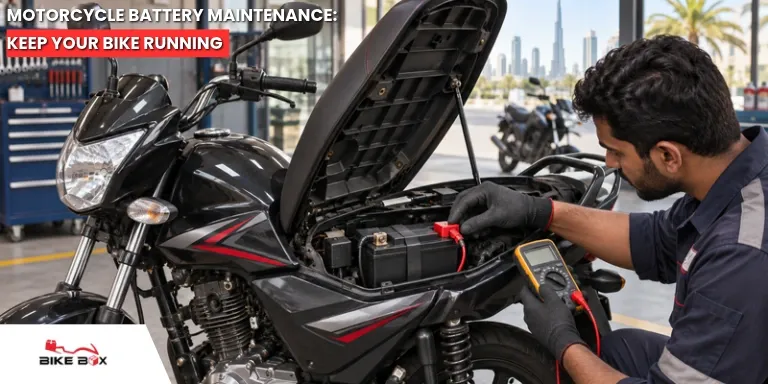
It is the middle of a busy delivery shift. Your next order is ready, the customer is waiting and you turn the ignition key. Instead of hearing the engine start, you hear a weak clicking sound. Your motorcycle battery has let you down.
Battery problems rarely happen without a reason. Poor charging habits, excessive heat, loose connections and neglected maintenance can gradually weaken even a good battery.
Regular motorcycle battery maintenance keeps your engine starting smoothly, protects electrical components and reduces unexpected breakdowns. It is particularly important for riders in the UAE and Saudi Arabia, where motorcycles face extreme temperatures and demanding road conditions.
Fortunately, keeping your battery healthy does not require advanced mechanical knowledge. A few simple checks and better riding habits can make a real difference.
This guide explains how to maintain, test, charge and protect your motorcycle battery, helping you enjoy more time on the road and spend less time dealing with repairs.
Why Is Motorcycle Battery Maintenance Important?
Your motorcycle battery does more than start the engine. It supports the ignition system, dashboard, horn, indicators and various electrical components. On many modern motorcycles, it also supports electronic fuel injection and engine management systems.
A neglected battery can affect several of these functions. What begins as occasional starting trouble may eventually become a complete electrical failure.
Regular motorcycle battery care helps you:
- Improve engine starting reliability.
- Extend your motorcycle battery life.
- Maintain dependable electrical performance.
- Identify electrical problems before they become serious.
- Reduce unnecessary repair and replacement expenses.
- Avoid unexpected interruptions during delivery shifts.
For professional delivery riders, reliability is especially valuable. Every unexpected breakdown affects working hours, customer satisfaction and daily earnings.
Fleet operators should include battery inspections when calculating their delivery bike maintenance costs. Preventive maintenance often costs less than dealing with an unexpected roadside breakdown.
Understanding Different Types of Motorcycle Batteries
Before developing a maintenance routine, identify which battery your motorcycle uses. Different battery technologies have different charging requirements, operating characteristics and maintenance needs.
Conventional Lead Acid Motorcycle Batteries
Conventional lead acid batteries contain lead plates surrounded by a liquid electrolyte. They are commonly used in older motorcycles and some affordable commuter models.
Serviceable versions require periodic electrolyte inspections. During hot weather, water loss can expose the internal plates and reduce battery performance.
These batteries are generally affordable but require more attention than sealed alternatives. They must also remain securely positioned according to the manufacturer's instructions.
If your motorcycle uses a conventional battery, checking its electrolyte level should become part of your regular maintenance routine.
Absorbent Glass Mat (AGM) Batteries
An AGM motorcycle battery uses absorbent fiberglass mats to hold the electrolyte between its internal plates.
Unlike conventional flooded batteries, sealed AGM batteries do not require routine water refilling. They also offer good resistance to vibrations, making them a practical choice for many modern motorcycles.
However, maintenance-free does not mean completely maintenance-independent. AGM batteries still need correct charging, clean connections and regular condition checks.
Using the correct charger is particularly important because unsuitable charging settings can damage the battery.
Gel Motorcycle Batteries
Gel batteries contain a thickened electrolyte instead of freely flowing liquid. Their construction reduces the risk of spillage under normal operating conditions.
They generally require little routine maintenance but are sensitive to incorrect charging voltages. Excessive voltage can permanently damage their internal structure.
Before purchasing a gel battery, confirm that your motorcycle's charging system supports this technology. Replacing one battery type with another without checking compatibility can create unnecessary electrical problems.
Lithium Ion Motorcycle Batteries
Many modern lithium motorcycle batteries use lithium iron phosphate technology, also known as LiFePO4.
These batteries are popular because of their lightweight construction, strong starting performance and relatively low self-discharge rate.
However, lithium batteries have different charging requirements from lead acid batteries. Some conventional chargers use recovery or desulfation modes that can damage lithium batteries.
Always select a manufacturer-approved charging system and confirm that the battery is compatible with your motorcycle.
Battery type | Maintenance level | Main consideration |
Conventional lead acid | Moderate | Requires electrolyte inspections |
AGM | Low | Requires compatible charging |
Gel | Low | Sensitive to excessive charging voltage |
Lithium iron phosphate | Low | Requires suitable charging and protection |
Choosing the right motorcycle battery and quality replacement parts can make a significant difference in your bike's performance. At Bikebox, we supply high-quality motorcycle spare parts across the UAE and KSA, helping everyday riders and commercial delivery fleets keep their motorcycles running reliably.
Common Signs Your Motorcycle Battery Is Failing
A failing motorcycle battery often provides several warning signs. Paying attention to small changes in your bike's performance can help you identify trouble before the battery stops working completely.
Slow or Difficult Engine Starting
A healthy battery should provide sufficient power to operate the starter motor. If your motorcycle takes longer to start or produces a slow cranking sound, the battery may be losing its starting capacity.
A repeated clicking sound can also indicate insufficient electrical power. However, loose connections, a faulty starter relay or starter motor problems may produce similar symptoms.
Testing the battery before replacing it helps prevent unnecessary expenses.
Dim Lights and Weak Electrical Performance
Changes in electrical performance can reveal potential battery or charging problems.
Watch for these warning signs:
- Dashboard lights flickering unexpectedly.
- A weak or inconsistent horn.
- Unusual changes in headlight brightness.
- Electrical accessories switching off unexpectedly.
- Dashboard displays resetting during engine starting.
These symptoms deserve attention, especially when several appear together. A battery test and electrical inspection can help identify the actual problem.
Frequent Loss of Battery Charge
Does your motorcycle start perfectly after charging but struggle again the following morning?
The battery may have lost some of its storage capacity. Alternatively, an electrical component could be consuming power while the motorcycle is parked.
Repeated charging without investigating the cause rarely provides a permanent solution.
A technician can determine whether the problem comes from the battery, charging system or an abnormal electrical drain.
Corrosion, Swelling or Battery Leakage
Inspect the battery whenever you notice unusual electrical behaviour.
Corrosion around the terminals can create resistance and interfere with electrical connections. Cracks, swelling and electrolyte leakage indicate potentially serious damage.
Never attempt to charge a visibly swollen, leaking or damaged battery. Stop using it and arrange a professional inspection.
You can also explore these common bike battery problems and their solutions to understand other symptoms and possible causes.
Essential Motorcycle Battery Maintenance Tips for Riders
Good battery maintenance comes down to consistency. A few minutes spent checking your motorcycle regularly can prevent hours of inconvenience later.
Check Your Battery Voltage Regularly
A digital multimeter provides a simple way to monitor your battery's charge level. A fully charged 12V motorcycle battery using lead acid technology generally produces a resting voltage of approximately 12.6 to 12.9 volts.
AGM batteries may show readings towards the higher end of this range.
Take the reading after the battery has rested for several hours. Testing immediately after charging may produce a temporarily elevated reading that does not accurately reflect its normal condition.
Keep Battery Terminals Clean and Secure
Even a healthy battery can struggle to start a motorcycle when its terminals are dirty or loose. Corrosion, road dust and moisture can interfere with electrical connections. Regular cleaning helps maintain efficient power transfer.
Follow these simple maintenance practices:
- Switch off the ignition before inspection.
- Check terminals for corrosion and dirt.
- Use a suitable battery terminal cleaning product.
- Inspect cables for damaged insulation.
- Tighten connections according to manufacturer specifications.
When disconnecting a battery, remove the negative terminal first. During installation, reconnect the negative terminal last. Avoid using metal tools in a way that could create a connection between the battery terminals.
Maintain the Correct Battery Charge Level
Leaving a lead acid battery discharged for long periods can encourage battery sulfation. This happens when persistent lead sulfate deposits develop on the internal plates. Over time, these deposits can reduce the battery's ability to accept and store energy.
Avoid leaving your motorcycle with a weak battery for several weeks. Recharge it using suitable equipment when necessary.
Motorcycles used occasionally may benefit from a compatible automatic battery maintainer that prevents extended periods of low charge.
Check Electrolyte Levels in Conventional Batteries
Conventional serviceable batteries require enough electrolyte to cover their internal plates correctly.
In hot climates, water loss may occur more quickly. Ignoring low electrolyte levels can cause permanent battery damage.
When performing routine maintenance:
- Follow the battery's minimum and maximum level markings.
- Use distilled water when topping up.
- Wear protective gloves and eye protection.
- Avoid filling beyond the recommended level.
Never add tap water or extra battery acid during routine topping up. Do not open sealed AGM, gel or lithium batteries.
Protect Your Battery From Extreme Temperatures
Heat is one of the biggest challenges for motorcycle batteries in the Gulf region. Excessive temperatures accelerate internal battery ageing. A battery that receives constant exposure to high temperatures may deteriorate sooner than expected.
Whenever possible, park in shaded areas, covered parking facilities or ventilated garages.
Keep the original battery compartment and protective covers in good condition. Avoid adding insulation or materials that could interfere with the motorcycle's intended ventilation.
Avoid Leaving Electrical Accessories Switched On
Additional lights, USB chargers, GPS trackers and illuminated delivery boxes can increase electrical demand. Some accessories may continue drawing power even when the ignition is switched off.
Turn off unnecessary equipment before leaving your motorcycle. Additional accessories should use appropriate wiring, fuses and electrical connections.
Inspect the Battery for Physical Damage
Daily riding exposes motorcycles to vibrations, uneven roads and sudden movements. Over time, these conditions may loosen battery mounting brackets or electrical connections.
Check that the battery remains securely positioned inside its compartment. Look for damaged cables, missing protective terminal covers and signs of excessive movement.
This inspection is especially important for delivery motorcycles that spend several hours on the road every day.
A securely mounted battery is less exposed to unnecessary movement and potential connection damage.
How to Test Your Motorcycle Battery Health
Testing your motorcycle battery helps you identify charging problems before they develop into unexpected breakdowns.
Use a digital multimeter to measure the motorcycle battery voltage. Switch off the ignition, select the appropriate DC voltage setting and connect the probes to the corresponding battery terminals.
The following readings provide a general reference for a 12V lead acid motorcycle battery at rest.
Resting battery voltage | Approximate condition |
12.7–12.9V | Fully or nearly fully charged |
12.4–12.6V | Partially to nearly fully charged |
12.0–12.3V | Low charge |
Below 12.0V | Heavily discharged |
These values vary according to battery technology, temperature and manufacturer specifications. They do not apply directly to lithium batteries.
Remember that voltage alone cannot confirm battery health. An ageing battery may show normal voltage but fail to supply sufficient starting current.
A professional battery load test helps determine whether the battery can deliver adequate power under demand.
Read our detailed guide on how to test motorcycle battery health at home for a better understanding of battery testing.
How to Charge a Motorcycle Battery Safely
Correct charging protects the battery's internal components and helps maintain reliable electrical performance. Incorrect charging can cause overheating, reduced capacity and permanent damage.
Choose the Correct Motorcycle Battery Charger
Select a charger designed for your battery's voltage, capacity and technology. A compatible smart motorcycle battery charger automatically adjusts its charging process according to the battery's requirements.
Look for the following features:
- Compatibility with your battery type.
- Automatic charging control.
- Suitable charging current.
- Overcharging protection.
- An approved maintenance mode.
Avoid using high-output car battery chargers unless the manufacturer specifically approves them for your motorcycle battery.
Follow the Recommended Battery Charging Process
Before charging, inspect the battery for swelling, cracks or leakage. Follow the motorcycle and charger manufacturer's instructions regarding battery removal, connections and charging settings.
Choose a dry, ventilated location away from flames, sparks and excessive heat. Switch off the charger before connecting or removing its leads.
Stop charging immediately if the battery becomes unusually hot, develops swelling or produces an unusual smell.
Prevent Battery Overcharging and Deep Discharging
Excessive charging voltage can damage battery components. Repeated deep discharging can also reduce battery capacity.
A compatible motorcycle battery maintainer can help keep an occasionally used motorcycle ready for its next ride.
However, not every charger is suitable for continuous connection. Check that your charger has an approved maintenance mode before leaving it connected for extended periods.
What Causes Motorcycle Batteries to Drain Quickly?
A battery that constantly needs charging is often a symptom of another problem. Understanding the cause helps you avoid replacing a battery that may still be perfectly usable.
Frequent Short Trips and Engine Starts
Every engine start consumes electrical energy. The motorcycle's charging system must restore that energy during operation.
Frequent short journeys may not provide enough time or charging output to replenish the battery.
For example, a delivery rider completing numerous short orders throughout Dubai may gradually consume more electrical energy than the motorcycle restores. Additional electrical accessories can make this problem worse.
Faulty Motorcycle Battery Charging System
The motorcycle charging system includes components that generate and regulate electricity while the engine runs.
A damaged stator, faulty regulator-rectifier, or poor electrical connection can interrupt normal charging. Some faults may also cause excessive charging voltage.
Replacing the battery without repairing the charging system can result in the same problem returning within days or weeks.
Delivery riders using Bajaj motorcycles can learn more about mechanical and electrical reliability in our guide to common Bajaj Boxer faults during heavy delivery use.
Extreme Heat and Weather Conditions
High temperatures accelerate chemical reactions inside motorcycle batteries. This can increase self-discharge and contribute to premature internal deterioration.
The effects are particularly noticeable in motorcycles exposed to direct sunlight for several hours daily.
A battery may continue working during summer while gradually losing capacity. Starting problems can appear later, even after temperatures become cooler.
Parasitic Drain From Electrical Accessories
Parasitic battery drain happens when electrical components consume power while the motorcycle is switched off.
Possible causes include:
- GPS tracking systems.
- Security alarms.
- Incorrectly installed USB chargers.
- Additional LED lighting.
- Damaged electrical wiring.
Some background power consumption is normal. Excessive consumption, however, requires professional investigation.
Long Periods Without Riding
Batteries naturally lose some charge during inactivity. Connected electrical systems may increase this discharge.
A motorcycle parked for several weeks may struggle to start, even if its battery was previously working well.
Check the battery periodically during extended inactivity and recharge it according to manufacturer recommendations.
How to Maintain Bike Batteries in Summer
Summer temperatures in parts of the UAE and Saudi Arabia can exceed 40°C, particularly during June, July and August.
Motorcycles operating throughout Dubai, Abu Dhabi, Riyadh, Jeddah and Dammam may face prolonged exposure to intense heat.
During summer, inspect your battery more frequently. Pay particular attention to changes in starting performance, electrolyte levels where applicable, and the condition of electrical connections.
Park under shade whenever available. Allow the motorcycle to cool before performing maintenance or charging the battery.
Commercial fleet managers should introduce additional inspections before the hottest months arrive. Identifying weak batteries early can help prevent interruptions during peak delivery hours.
Regular maintenance and quality spare parts are particularly important for motorcycles operating in the Gulf's demanding climate. If you need reliable motorcycle spare parts across Saudi Arabia and Dubai for your daily rides or commercial delivery fleet, Bikebox can help you find suitable replacement parts.
Motorcycle Battery Maintenance Checklist for Every Rider
A regular maintenance schedule makes battery care easier. Use this checklist as a starting point and adjust it according to your motorcycle manufacturer's recommendations.
Maintenance task | Suggested frequency |
Monitor engine starting performance | Daily |
Inspect battery casing and mounting | Weekly |
Check battery terminal condition | Monthly |
Measure resting battery voltage | Monthly |
Inspect electrolyte levels, if applicable | Monthly or more frequently during summer |
Check charging system performance | During scheduled servicing |
Inspect battery before extended storage | Before storage |
Perform a professional battery health test | When starting problems appear |
Commercial motorcycles may require shorter inspection intervals because of their demanding daily workload.
Fleet operators can also use our motorcycle spare parts replacement interval guide to develop a more comprehensive preventive maintenance schedule.
When Should You Replace Your Motorcycle Battery?
Most conventional and AGM motorcycle batteries have an approximate service life of 2 to 5 years. However, battery quality, climate, charging habits and riding conditions can significantly influence this period.
Understanding the difference between a discharged battery and a damaged battery can help you avoid unnecessary replacements.
Battery symptom | Recommended action |
Low voltage after extended parking | Recharge and investigate electrical drain |
Slow starting despite sufficient charge | Perform a professional load test |
Battery repeatedly loses charge while riding | Inspect the charging system |
Corroded or loose terminals | Clean and secure the connections |
Swollen, cracked or leaking battery | Stop using it and arrange safe replacement |
Battery fails a professional health test | Replace with a compatible battery |
When purchasing a motorcycle battery replacement, check its voltage, dimensions, capacity, terminal positions and starting current requirements.
Explore our guide to the best motorcycle battery brands to understand available options before purchasing. Always dispose of old batteries through an authorized recycling or battery collection facility.
Final Thoughts
Motorcycle battery maintenance does not need to be complicated. Regular voltage checks, secure connections, suitable charging equipment and protection against extreme temperatures can help keep your motorcycle running reliably.
The most important habit is paying attention to small changes. A slower engine start or an unexpected drop in battery voltage deserves investigation before it becomes a serious problem.
For everyday riders, preventive maintenance reduces unnecessary expenses. For delivery businesses, it helps protect productivity and maintain dependable operations.
At Bikebox, we provide high-quality motorcycle spare parts across the UAE and KSA. Contact our team to find reliable spare parts for bikes.
FAQs
How Often Should I Check My Motorcycle Battery?
Check your motorcycle battery voltage and terminals at least once a month. Commercial riders and those operating in extreme heat should perform inspections more frequently.
How Long Does a Motorcycle Battery Last?
Most lead-acid motorcycle batteries last about 2 to 5 years. Proper charging, regular maintenance, riding frequency and environmental conditions influence their actual service life.
What Is the Normal Motorcycle Battery Voltage?
A fully charged 12V lead acid motorcycle battery typically measures 12.6 to 12.9 volts at rest. Exact readings vary according to battery construction and temperature.
Does Riding a Motorcycle Charge Its Battery?
Yes, a functioning motorcycle charging system replenishes battery power while the engine runs. However, frequent short journeys may not fully restore the energy consumed during starting.
Can Extreme Heat Damage a Motorcycle Battery?
Yes, extreme heat accelerates internal battery deterioration and increases water loss in flooded batteries. Regular inspections and shaded parking can help reduce unnecessary heat exposure.
Why Does My Motorcycle Battery Keep Dying?
Common causes include battery ageing, faulty charging systems, parasitic electrical drain, frequent short journeys and extended inactivity. Professional battery testing can identify the underlying problem.